
Are Private Yachts Safe for Toddlers? Water Play and Rest
A toddler’s comfort aboard a yacht depends as much on rest as on time on the water. If you’re asking, “Are private yachts safe for toddlers and young children?”, a trip can suit your family when children have properly fitted life jackets, close adult supervision, and a calm plan that allows for breaks. According to the U.S. Coast Guard, children under 13 must wear a USCG-approved life jacket on the deck of a moving vessel in U.S. waters.
It’s natural to think first about waves and water activities, but a young child’s energy, nap routine, and comfort in a new setting matter too. A day on the water is more enjoyable when little ones can settle, rest, and take part at a pace that works for them.
This article explains how life jackets, charter age, supervision, swimming, and rest shape the decision. You’ll come away with practical considerations for choosing a yacht outing that feels manageable for your family, rather than assuming every trip or activity is right for every child.
Table of Contents
1. Life-jacket rules for children aboard moving vessels
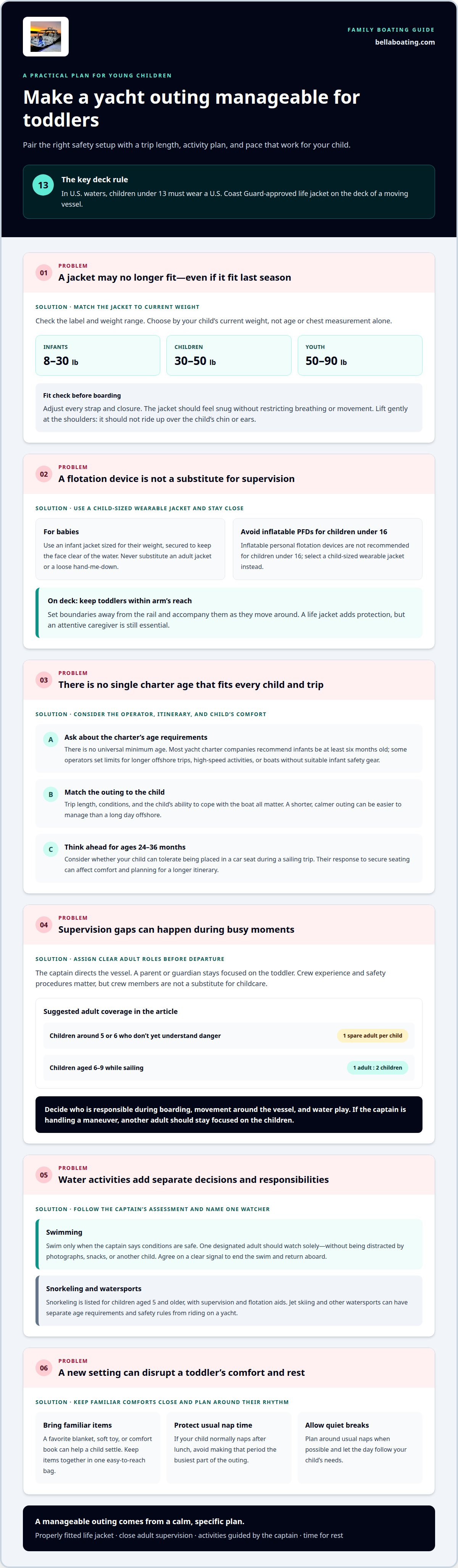
U.S. boating safety rules require children under 13 to wear a U.S. Coast Guard-approved life jacket on the deck of a moving vessel in U.S. waters, including the USVI, according to the U.S. Coast Guard. For a private yacht, that means a child must have a properly fitted life jacket on deck while underway. A flotation device is essential, but it doesn’t replace an adult’s close supervision.
Choose a jacket by your child’s current weight, not chest measurement or age alone. Listed sizing ranges include 8 to 30 pounds for infants, 30 to 50 pounds for children, and 50 to 90 pounds for youth. Check the label and weight range before the trip. A growing toddler may have outgrown a jacket that fit well last season.
Before boarding, put the life jacket on and adjust every strap and closure. It should feel snug and secure, without restricting breathing or movement. Lift gently at the shoulders: the jacket shouldn’t ride up over the child’s chin or ears. The Virgin Islands Department of Planning & Natural Resources also says personal flotation devices must fit each child’s body type and size.
For babies, use an infant life jacket sized for their weight, with a secure fit that keeps the face clear of the water. Never substitute an adult jacket or a loose hand-me-down. Inflatable personal flotation devices aren’t recommended for children under 16, so select a child-sized wearable jacket instead.
Make the life-jacket fit check part of your departure routine, alongside sunscreen and other essentials. Keep each child’s jacket accessible, and have them wear it when required aboard a moving vessel. If your toddler resists the feel, let them try it on briefly before boarding while an adult adjusts the straps and checks that it stays in place. A calm practice run can make wearing it more familiar.
2. What Age Can Kids Go on a Yacht Charter?
There isn’t one universal minimum age for a yacht charter. Most yacht charter companies recommend infants be at least six months old, while some operators set age limits for longer offshore trips, high-speed activities, or boats without suitable infant safety gear. For toddlers, age alone isn’t the deciding factor: trip length, conditions, and the child’s ability to cope with the boat all matter.
A private yacht isn’t automatically safer than a charter boat or cruise ship. Each setting has different routines and spaces; the practical risks for toddlers include moving around a vessel, reaching the water, and becoming unsettled by motion or a change in routine. A shorter, calmer outing can be easier to manage than a long day offshore. A crewed yacht charter has a captain and crew, while a flotilla involves boats traveling together, but neither format replaces a parent’s supervision.
Before departure, agree on clear roles: the captain directs the vessel, and a parent or guardian stays focused on the toddler. Crew experience and safety procedures matter, but crew members are not a substitute for childcare. Listen to the captain’s safety briefing and follow the crew’s instructions. Parents can prepare by bringing the child’s usual medication, noting allergies, and keeping emergency contact details accessible.
For children aged 24 to 36 months, consider whether they can tolerate being placed in a car seat during a sailing trip. This can affect comfort and planning, so think about how your child responds to secure seating before choosing a longer itinerary. Bring familiar items for rest, such as a favorite blanket, and plan around usual naps when possible. A relaxed yacht outing may be a gentler first experience than an extended trip, especially for a toddler who is new to being aboard.
3. Child supervision and water activities
Parents often ask, “Are private yachts safe for toddlers and young children?” Close, uninterrupted adult supervision is essential. Keep toddlers within arm’s reach on deck, set clear boundaries away from the rail, and accompany them as they move around the yacht. A life jacket adds protection, but it doesn’t replace an attentive caregiver.
Preventing a child from falling overboard takes consistent supervision, not just rules. Assign one adult to stay focused on each younger child, especially during transitions between areas. For children around 5 or 6 who don’t yet understand danger, plan for one spare adult per child. While sailing, the suggested ratio for children aged 6 to 9 is one adult for every two children.
Water play needs its own plan. Children should swim only when the captain says conditions are safe, with one designated adult focused solely on watching them. That adult shouldn’t be distracted by photographs, snacks, or another child. Agree on a clear signal for ending the swim and returning aboard.
Snorkeling is listed as an activity for children aged 5 and older, with supervision and flotation aids. Jet skiing and other watersports can have separate age requirements and safety rules from riding on a yacht. A toddler who enjoys splashing near shore may still find open-water activities overwhelming, so match activities to the child and conditions.
So, are private yachts safe for toddlers and young children during water activities? Safety depends on close supervision and following the captain’s directions. Before departure, decide which adult is responsible during boarding, movement around the vessel, and water play. If the captain is handling a maneuver, another adult should remain focused on the children. Clear roles help prevent gaps in supervision when several family members are aboard.
4. Comfort items and rest for young children
A toddler’s first yacht outing can feel exciting and unfamiliar at once. Bring familiar items, such as a favorite blanket, soft toy, or comfort book, to help your child settle between new sights and activities. Keep them together in one easy-to-reach bag.
Plan around your child’s usual rhythm. If they normally nap after lunch, avoid making that period the busiest part of the outing. Offer a quiet break before tiredness turns into distress, and let the child rest in a safe, supervised place aboard. An adult should remain responsible for the child, even during a peaceful pause.
Clothing can support comfort as conditions change. Pack a light layer for cooler moments and a change of clothes after spills. Familiar food and water can also help maintain your child’s routine, especially if they are selective about unfamiliar meals. Keep small belongings secured so they don’t slide across the deck.
Build flexibility into the day rather than expecting a toddler to enjoy every activity. A child who has watched the coastline for a while may need a quiet moment before returning to the view. Offer simple choices, such as a story or a snack, and pause activities when the child shows signs of fatigue. Short, calm intervals can make the outing more manageable than a packed schedule.
Before departure, gather the comfort items your child uses at home and decide who will help with rest breaks. A familiar blanket, regular snack, and predictable nap window can turn time aboard into a more relaxed family experience. For a gentler day on the water, plan a calm private yacht outing around your family’s pace.
Bella Boating
Bella Boating offers private yacht excursions from Marina del Rey for families considering whether time on the water suits their young children. A professional captain and crew are included on each charter, while parents remain responsible for supervising their children and planning for their comfort.
Consider the outing’s length, pace, and destination alongside your child’s routines. A Coastal Tour or Sunset Cruise may be a better fit for a family seeking a shorter outing, while a Malibu Excursion or Catalina Island Trip suits different plans. The right choice depends on your child’s ability to rest and remain comfortable aboard, as well as the supervision the adults can provide.
For help choosing a Marina del Rey outing that fits your family’s plans, contact Bella Boating.
Choose a Day on the Water That Fits Your Family
Whether private yachts are safe for toddlers and young children depends on how well the outing suits your child, not simply on the destination. Before choosing a trip, think about what helps your family enjoy time together: a slower pace, a scenic coastline, or a special occasion. Keeping your child’s comfort in mind can help shape an outing that feels enjoyable for everyone.
Bella Boating offers a Sunset Cruise, coastal tours, and trips to destinations such as Malibu for families considering time on the water. Each offers a different way to experience the coast from Marina del Rey. Choose an outing that matches your plans and your child’s comfort with the trip length.
Share your plans and family’s priorities with Bella Boating as you consider your next outing. Ask Bella Boating about your trip, and take the next step toward a memorable day together on the water.
Frequently Asked Questions
Can Children Ride Private Yachts Safely?
Yes, children can ride private yachts when the outing suits their needs and adults stay attentive. For example, a toddler who tires easily may be more comfortable on a shorter coastal outing than a long day on the water. Think about how your child handles motion, unfamiliar surroundings, and changes to routine. A private charter lets your family spend the outing together, with the adults responsible for supervision.
Can You Sail With A Baby?
Yes, babies can sail, but their needs shape the trip. Most yacht charter companies recommend infants be at least six months old. Consider whether your baby can rest comfortably aboard and whether an adult can give them close attention throughout the outing. A baby may need one-to-one attention in a safety situation, so plan which adult will focus on them.
Sailing With Children - Is It Safe?
An outing with children is easier to manage when adults agree on roles and plan for transitions. For example, decide who stays with a child while the family boards or moves around the yacht. Keep children away from the water’s edge, and pause activities when the captain gives instructions. A child’s comfort with movement and understanding of boundaries also affect the outing.
What Age Can Kids Go on a Yacht Charter?
There’s no single minimum age for every yacht charter. Most companies recommend infants be at least six months old, while some operators set limits for longer offshore trips or activities. The child’s ability to cope with the itinerary matters too. For children aged 24 to 36 months, consider whether they can tolerate being placed in a car seat during a sailing trip.
What Safety Features Should Parents Look For?
Look for a protected cockpit and an itinerary planned for calm water, especially when traveling with an infant. These choices can offer a more sheltered setting and a gentler experience than an exposed, demanding route. A family outing should also have clear boundaries for where children can sit or play. Match the trip’s pace to your child’s comfort and attention needs.
What safety equipment should a private yacht have for young children?
A yacht should have U.S. Coast Guard-approved life jackets available for passengers, including child-sized options. Bella Boating’s charter vessel is approved by LA County and the U.S. Coast Guard and is equipped with all required safety equipment. For a Marina del Rey outing, parents should also keep a child’s jacket accessible and ensure it fits securely before the vessel gets underway.
Comments