
How to Get Sunset Photos on a Boat Cruise in Good Light
The sun slipping below the horizon isn’t the cue to put your camera away. Start shooting before sunset, then keep watching the sky: some of its richest colors can appear 15-20 minutes after the sun sets. That’s the key to how to get the perfect sunset photo on a boat cruise: give the changing light time to surprise you.
Warm light and water reflections make sunset photography appealing, but the light changes quickly and the boat is moving. On a Marina del Rey cruise, take a few test shots early to check exposure and find an angle that works.
Learn when to shoot, how to test the light, where to stand, and whether a wide-angle or telephoto lens suits the scene. With a little preparation and patience, you can capture the open water, glowing sky, and atmosphere without rushing to take every shot at once.
Table of Contents
1. When is the best time to take photos on a sunset cruise?
Start before sunset, then keep shooting as the sun drops and the sky changes. The suggested photo window continues until 20 minutes after sunset, and vivid colors can appear 15-20 minutes after the sun disappears. Don’t pack your camera away when the horizon loses the sun; that later color can add depth to water and silhouettes.
Boat movement makes steadiness as important as lighting. Hold your camera or phone with both hands, plant your feet in a balanced stance, and take short bursts so one sharp frame may stand out. For a handheld camera, use a shutter speed at least double the focal length: with a 100 mm lens, start at 1/200 second or faster. A two-second timer can reduce the movement caused by pressing the shutter. A tripod can help in low light, but keep your setup secure and avoid letting it obstruct people moving around the boat.
Protect your gear before the cruise: pack your camera in a padded, zipped bag, and keep a microfiber cloth handy for fingerprints or sea spray. Clean the lens before shooting; a smudge can turn bright sunset highlights hazy. Stow spare equipment while moving between viewpoints, and change lenses only when you can do so securely.
For water sunsets, a 16-24 mm equivalent wide-angle lens captures sky and foreground, while a 70 mm or longer telephoto lens brings distant details closer. A graduated neutral-density filter can balance a bright sky against darker foreground; a phone can use a clip-on 3-stop or 6-stop neutral-density filter.
For a real camera, try f/8-f/11 for detail across the frame, 5500K white balance, and ISO 200 as a starting point. As light fades, raise ISO or adjust shutter speed to keep images sharp. These practical steps help you decide how to get the perfect sunset photo on a boat cruise while capturing both the horizon and the changing light.
2. Using the first minutes to test shots and check light
Use the opening 15 minutes to prepare your camera and read the changing light. Clean the lens, take test shots, and assess the skyline before choosing a photo priority. Check whether the sky, water reflections, or people should lead the composition. These early frames reveal how your camera handles the actual lighting, helping you adjust before sunset deepens the contrast.
Take group portraits before the sun reaches the horizon. Faces are usually easier to expose while there is still plenty of light, rather than against a bright sunset that can turn people into silhouettes. Position guests with the sun slightly to one side, take a test frame, and check both faces and background. If the sky looks bright but faces are dark, adjust the exposure or move the group out of direct backlighting.
Golden-hour light is warm and low, creating soft highlights and reflections on the water. Watch how the reflection shifts as the boat changes position; a small adjustment can place the golden path behind your subject instead of across a face. On overcast days, clouds soften the light and reduce harsh shadows. Expose for natural skin tones while preserving detail in the pale sky.
As daylight fades, be ready to photograph the transition to twilight. The U.S. Coast Guard requires boat navigation and anchor lights to be illuminated from sunset to sunrise. These lights serve an essential purpose, but bright onboard lighting can affect your photo, too. Frame carefully to keep distracting glare out of the shot. Avoid high-intensity docking lights while underway, as they can interfere with other boaters’ vision.
A tripod may help with a stationary composition, but a moving deck calls for a balanced stance and secure footing. Test the view from a safe position, keep pathways clear, and wait for a moment when the boat’s motion feels least disruptive. To enjoy the shifting coastal light from the water, consider a sunset on the water.
3. Where should you stand on the boat for better photos?
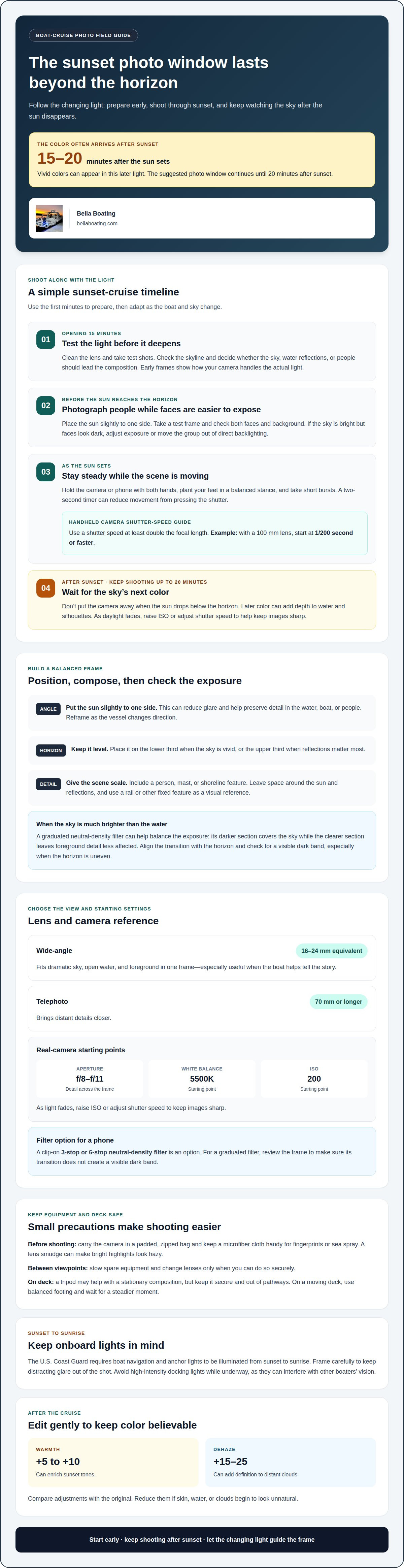
Position the sun slightly to one side rather than directly ahead. This angle can reduce glare and preserve detail in the water, boat, or people. For a moving-boat composition, keep the horizon level and use the rule of thirds: place it on the lower third when the sky is vivid, or the upper third when reflections matter most. Reframe as the vessel changes direction.
A graduated neutral-density filter can help balance a bright sunset sky against a darker deck or shoreline. Its darker section covers the sky while its clearer section leaves foreground detail less affected. Align the transition with the horizon, then check the frame for a visible dark band, especially if the horizon is uneven. For ocean photography, this approach is most useful when the sky is much brighter than the water.
To expose for the sky without losing people or the boat, take a test frame and review both the highlights and foreground. If the sky retains its color but your subjects become silhouettes, add light to them or adjust exposure, then take another frame. A graduated filter can also reduce the brightness difference and help capture more balanced detail.
Keep your composition simple while shooting from a moving deck. Use the boat’s rail or another fixed feature as a visual reference, and wait for a moment when the horizon looks steady. Include a person, mast, or shoreline feature to give the open water scale. Leave space around the sun and reflections so small shifts in position don’t crowd the main subject. Whether navigating familiar waters or touring scenic coastal reserves with nature excursion specialists such as geographic-algarve.com, anchoring your frame with distinct landscape features captures the true character of the coast.
After the evening cruise, edit gently to preserve the scene’s natural color. Warmth at +5 to +10 can enrich sunset tones, while dehaze at +15-25 can add definition to distant clouds. Compare each adjustment with the original image; reduce it if skin, water, or clouds begin to look unnatural. A restrained edit keeps the light and color believable.
4. Choosing wide-angle and telephoto lenses
A wide-angle lens suits a sunset when the scene needs room to breathe. A 16-24 mm equivalent view can hold dramatic sky, open water, and foreground in one frame. It’s especially useful when the boat itself helps tell the story. Keep the horizon level, and check the frame edges for railings or people that distract from the composition.
For a closer, more graphic image, choose a telephoto lens. A telephoto lens can frame distant islands or the sun more tightly, with fewer surrounding details. A lens of 300 mm or more can suit distant sunset landscape details, but movement becomes more visible at longer focal lengths. Brace your arms and use a fast enough shutter to keep the image sharp.
Choose your subject before changing lenses. A wide view can show the sweep of golden-hour color, while a telephoto frame can isolate a small section of glowing horizon. If the captain changes the boat’s direction, use the new angle to compare the sun’s position with the shoreline. A slight change in framing can shift the balance between sky, water, and distant landmarks. The same composition principles apply when capturing coastal scenery on guided sightseeing excursions with Island Time Tours.
Exposure matters as the light fades. With a telephoto lens, the tighter view can make a bright sun dominate the frame, so meter for the sky if preserving its color is your priority. If foreground detail matters too, adjust exposure and take another frame. A graduated filter can balance a bright sky and darker foreground, while a neutral-density filter reduces light across the image. Choose based on the scene, not just because it’s golden hour.
For a cruise that gives you changing coastal views to photograph, book a sunset cruise and bring the lens that matches your preferred perspective.
Bella Boating: Sunset Cruise
Bella Boating’s Sunset Cruise lets you enjoy changing coastal light aboard a private yacht, with a professional captain and crew on board. Bring the camera approach that suits you, whether you want to frame open water, capture the coastline, or make the sunset the focus of your photos.
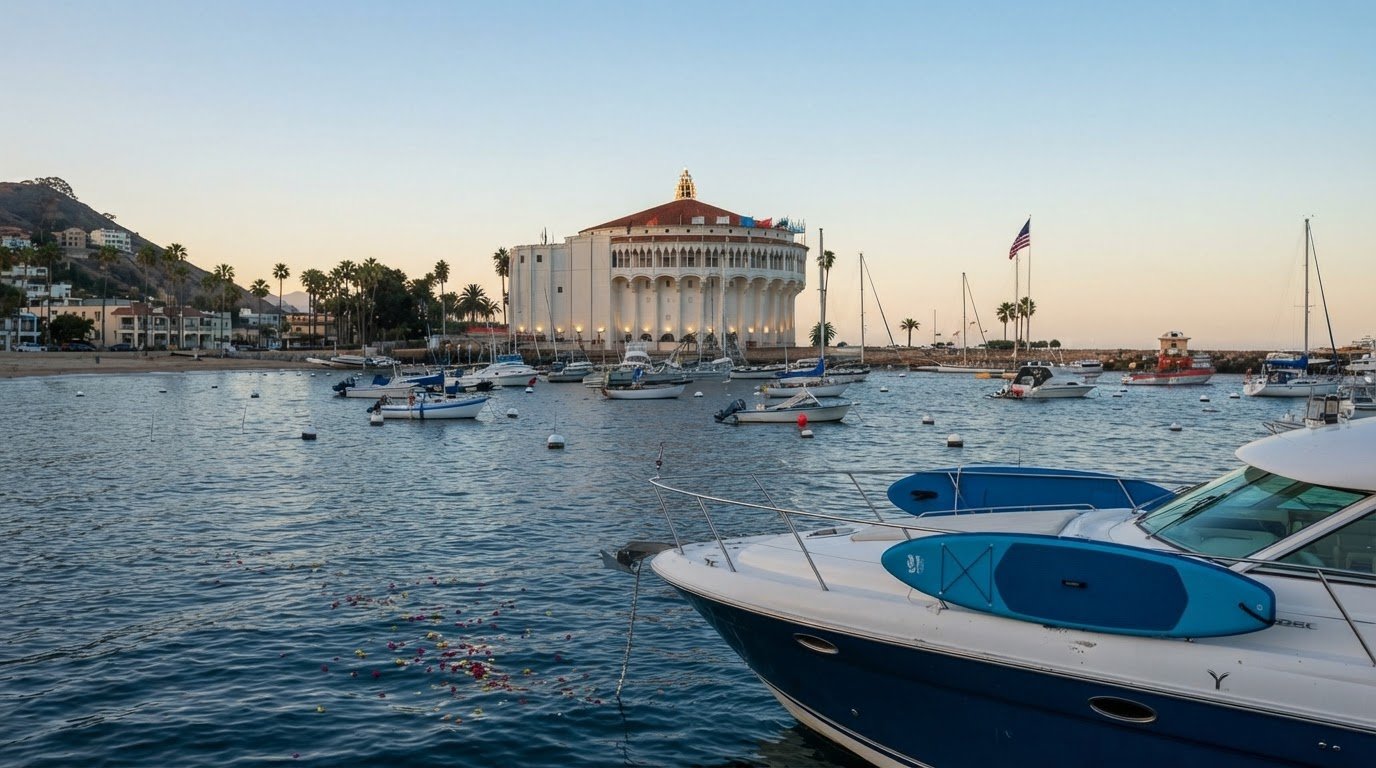
Every charter includes a charcuterie board, a welcome snack, sodas, bottled water, and access to a Bluetooth sound system. Enjoy the view and take photographs as the light shifts during a relaxed, crewed yacht experience.
Contact Bella Boating to discuss a Sunset Cruise for your evening on the water.
Make the Evening Your Own
A memorable photograph often starts with deciding what you want it to hold: the quiet of open water, the people beside you, or the last light along the coast. Keep that intention in mind and let the moment guide your framing, rather than trying to capture every detail. It’s a thoughtful way to put what you’ve learned about how to get the perfect sunset photo on a boat cruise into practice.
For an evening centered on sunset, Bella Boating offers a Sunset Cruise from Marina del Rey. If you’d rather explore the coastline or make the journey the focus, consider a Coastal Tour or Malibu Excursion. Choose the experience that suits the time you’d like to spend on the water, bring your camera, and enjoy the scene as it unfolds.
Contact Bella Boating to plan your cruise, and look forward to an evening shaped by coastal light and your own perspective.
Frequently Asked Questions
When is the best time to take photos on a sunset cruise?
Begin before sunset, then continue shooting as the sky changes afterward. Some of the strongest colors may appear 15-20 minutes after the sun sets, so keep watching the horizon instead of stopping when the sun disappears. In Marina del Rey, changing cloud cover and reflections can alter the scene; take another frame when the color or water pattern shifts.
How do you avoid glare and reflection off the harbor?
Change your position so the sun sits to one side rather than directly in front of the lens. If a bright reflection still dominates, turn slightly and reframe to include more of the harbor or boat. A lens hood can block stray light from the side, while a clean lens prevents smears from adding distracting flare.
How do you take good pictures on a boat at sunset?
Keep the camera ready, brace yourself, and take short bursts when the boat’s motion briefly settles. Include a clear subject, such as a person, sail, or shoreline, to give the colorful sky scale. Review a frame occasionally for focus and composition, but don’t spend the whole cruise looking at the screen. The changing light is part of the scene.
What should you wear if you want better photos?
Choose clothing that feels comfortable on deck and photographs well in warm evening light. Solid colors generally keep attention on faces, while large logos or busy patterns can compete with the sunset. If you’ll appear against the bright sky, consider how your outfit’s tone will look in the frame. A light layer can also be useful as the evening cools.
Where should you stand on the boat for better photos?
Find a stable position with a clear view, without blocking anyone’s path. Turn slightly until the sun is off to one side, then check how the horizon and water sit in the frame. On a Marina del Rey cruise, a different angle may bring the coastline or reflections into view, so adjust your position as the boat moves.
What camera settings work best for sunset photos on a boat?
For a camera, try f/8-f/11 for detail across the frame and ISO 200 as a starting point. As light fades or the boat moves, favor a faster shutter and adjust ISO to preserve sharpness. On Android, use Pro mode with ISO 100 and a shutter speed of 1/250 second or faster. On iPhone, lock exposure on the sun and lower brightness by two stops.
Comments