
Ways to Celebrate a Cancer Remission Milestone in Los Angeles
A remission milestone deserves a celebration shaped around what feels meaningful to you. For anyone celebrating a cancer remission milestone in Los Angeles, that might mean sharing a special meal with loved ones, spending quiet time outdoors, or reflecting on the journey. A cancerversary can mark the date you were declared free of the disease, but there’s no single right way to honor it.
The milestone may bring joy, gratitude, relief, or complicated feelings, and all of those responses are valid. Sharing the day with family and friends can make room for connection, while a private ritual allows time to reflect at your own pace.
This guide offers thoughtful ways to celebrate with loved ones, create positive memories, and recognize the resilience behind the milestone. It also explores what a cancerversary means and how to shape a gathering around your comfort, energy, and preferences.
Table of Contents
1. Celebrating with family and loved ones
A remission milestone can bring family and close friends together around a moment of personal meaning. For those celebrating a cancer remission milestone in Los Angeles, the gathering might be a special dinner, a quiet visit, or an activity chosen by the person being honored. Start by asking what would feel welcome, then shape the occasion around that preference.
Keep the plan personal rather than elaborate. Felicia Robinson marked the day she finished chemotherapy with bouquets of flowers from her family, a simple gesture that made the date feel recognized. A favorite meal, a handwritten card, or a playlist of meaningful songs can offer the same thoughtful attention. What matters is the connection behind the gesture, not its scale.
A shared meal can also give loved ones room to acknowledge the support that carried everyone through treatment. During the COVID-19 lockdown, one author’s sister organized a meal train for her and her husband. That example shows how practical care can become part of a milestone’s memory. For a celebration, relatives might contribute a dish, help prepare the table, or take care of cleanup so the guest of honor can focus on being present.
Consider inviting guests to share a memory or a few words of gratitude, while making participation optional. Talking with close friends and family about meaningful dates can help everyone reflect on their experiences. The conversation might include the diagnosis, last treatment, or remission announcement. Choose a comfortable setting and let the person celebrating change the subject or pause whenever they wish.
Public figures have also marked treatment milestones with loved ones. Robin Roberts took a week off from “Good Morning America” to celebrate her partner Amber Laign completing radiation treatment for breast cancer. Their example shows that a milestone can be honored simply by making time for the person and the moment. In Los Angeles, a family might set aside an evening for dinner or arrange a relaxed gathering with room for conversation.
Some milestones are tied to a specific date, while others are remembered through a personal tradition. One author planned to mark her third cancerversary since her breast cancer diagnosis on August 17, 2023. Whatever date matters in your family, share its significance before the gathering, so guests understand why it feels meaningful. A clear invitation can also explain whether the event is celebratory, reflective, or simply an opportunity to spend time together.
When relatives live far away, a call or shared photo album can include them without changing the gathering’s intimate feel. Whether the occasion brings together a full table or a few familiar faces, let the person being honored guide its tone and pace.
4. Ways to observe a cancer milestone
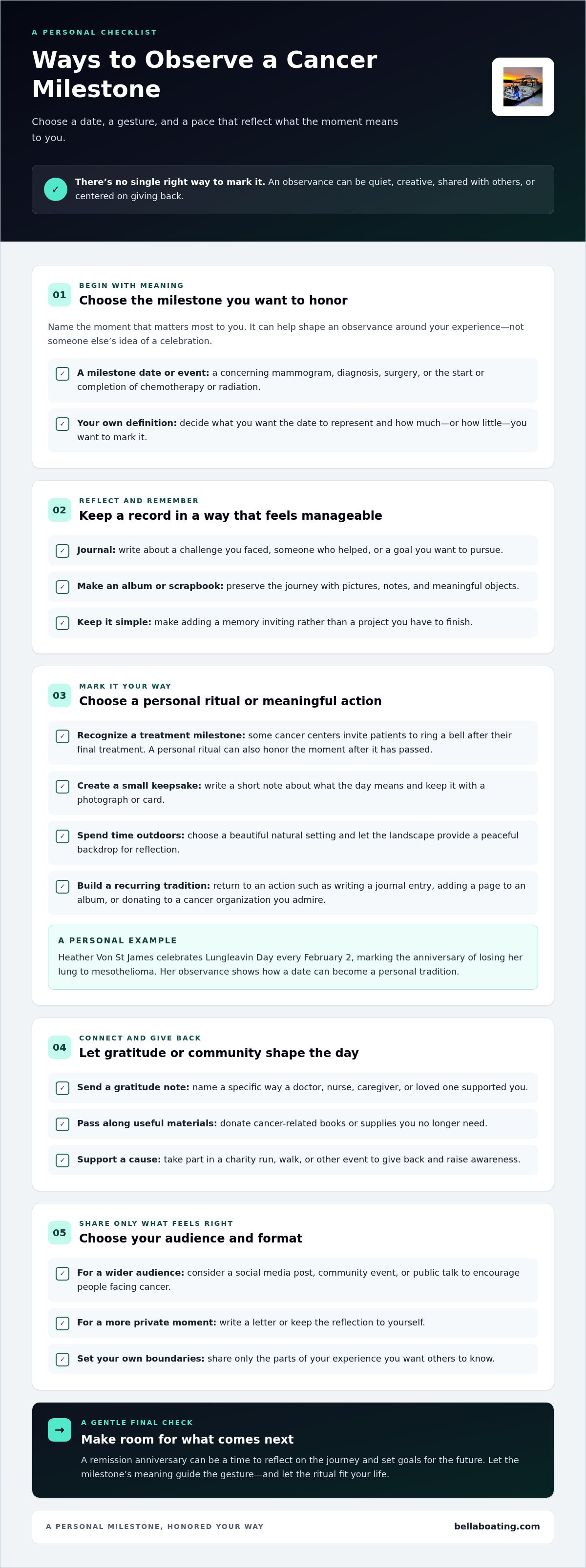
A meaningful observance can be quiet, creative, communal, or centered on giving back. Begin by choosing the date or moment that matters most. It might be a concerning mammogram, a diagnosis, surgery, or the start or completion of chemotherapy or radiation. Naming the milestone helps shape a ritual around what it represents, rather than someone else’s idea of celebration.
For private reflection, set aside time to journal about the experience and what comes next. Write about a challenge you faced, someone who helped, or a goal you want to pursue. A scrapbook or photo album can preserve the journey from diagnosis to remission with pictures, notes, and meaningful objects. Keep it simple, so adding a memory feels inviting rather than like a project to finish.
Some cancer centers invite patients to ring a bell after their final treatment. If that moment has passed, a personal ritual can still recognize the milestone. For example, write a short note about what the day means, then keep it with a photograph or a card. Heather Von St James celebrates Lungleavin Day every February 2, marking the anniversary of losing her lung to mesothelioma. Her observance shows how a date can become a personal tradition.
Choose an action that connects your experience with the people, places, or causes that matter to you. Options include:
Spend time outdoors in a beautiful natural setting, and let the landscape provide a peaceful backdrop for reflection.
Send a gratitude note to a doctor, nurse, caregiver, or loved one, naming a specific way they supported you.
Donate cancer-related books or supplies that you no longer need, so useful materials can serve someone else.
Support a charity run, walk, or other event to give back and raise awareness.
Sharing your story can also make the day meaningful. A social media post, community event, or public talk may encourage people facing cancer, while a private letter may feel more comfortable. Choose the audience and format that suit you, and share only the parts of your experience you want others to know.
For a recurring tradition, tie the observance to a clear action: write a journal entry, add a page to an album, or donate to a cancer organization you admire. A repeatable ritual gives the date shape without requiring a large gathering. In Los Angeles, pair an outdoor moment with reflection or choose an activity that makes room for remembrance and hope. Let the milestone’s meaning guide the gesture.
A remission anniversary can also be a time to look ahead: reflect on the journey in a journal and set goals for the future. If gratitude feels central, write to people who supported you and explain why you are grateful. A charity walk or run can pair remembrance with giving back and raising awareness; choose an event that feels right for you.
4. What accessibility and health precautions should you consider when planning a cancer remission celebration?
Start with the person being honored, not the event format. Ask what would make the gathering comfortable, then shape the location, pace, and guest list around the answer. Someone who tires easily, for example, may prefer a short visit at home to a long evening out. A calm plan leaves room to participate without making the celebration feel like an obligation.
Choose a setting that supports the guest’s mobility and comfort. Consider the distance from the entrance to the gathering area, available seating, restroom access, and whether the route has stairs or uneven ground. In Los Angeles, convenient parking or an easy drop-off point can reduce the effort of arriving. Share practical details with guests before they travel.
Build rest into the schedule rather than treating it as a disruption. A flexible gathering could begin with a brief welcome, allow time for a quiet break, and leave the end time open. The person celebrating can step away, sit down, or leave early without explaining. If they’re undergoing treatment, they should pay attention to their body, rest when needed, and ask for help.
Plan food thoughtfully, especially when treatment has affected eating or swallowing. According to the Centers for Medicare & Medicaid Services, chemotherapy, radiation therapy, or surgery for head and neck cancer can lead to swallowing problems. Ask the guest of honor what foods feel comfortable and plan a menu around their preferences. For example, offer a familiar meal and let them choose what to eat.
Keep the gathering’s sensory demands in mind. A crowded room, loud music, or tightly packed program can make conversation and rest harder. Choose a quieter space, keep music low enough for conversation, and avoid planning every moment. A short toast followed by unstructured time may feel more welcoming than a long sequence of speeches.
Make it easy for guests to contribute practical help. One relative can arrange transportation, another can prepare food, and someone else can handle cleanup. Clear roles keep the guest of honor from managing details. If attendees have different access needs, consider seating arrangements and a quiet place where anyone can pause.
Finally, let the person being celebrated set boundaries around conversation and photographs. They may welcome a toast but prefer not to discuss treatment, or want a group picture without sharing it publicly. A brief note in the invitation can guide guests: keep the gathering relaxed, follow the honoree’s lead, and ask before posting photos. These small choices help make the day considerate and genuinely theirs.
5. How can you honor a loved one at a remission celebration without making the event feel overwhelming?
Let the person being celebrated decide how much attention feels comfortable. Before planning, ask whether they’d welcome a toast, photograph, or small personal gesture. One clear preference can guide the event’s tone and prevent surprises. Someone who dislikes public speaking, for example, might prefer a card to read privately. Make the tribute thoughtful, not a performance.
Keep any tribute brief and specific. A short toast can recognize a meaningful quality, such as patience during treatment or humor that brightened difficult days. Avoid turning the celebration into a full account of medical history. Guests may remember different parts of the journey, and the honoree may not want every detail discussed. A few sincere words can recognize the milestone while leaving room for the rest of the gathering.
A meaningful object can carry the tribute without demanding attention. Display a favorite photograph, set out a comforting book, or play a song chosen by the person being honored. Give the item context in a sentence, then let guests respond naturally. A family photo, for instance, might prompt warm conversation without requiring a formal speech or personal disclosures.
Recognize the people who supported the survivor while keeping the honoree at the center. A handwritten note can name a specific kindness, such as a ride to an appointment or a well-timed message. If the honoree wants to recognize a caregiver, invite them to share a few words. Keep participation optional, so no guest feels responsible for creating an emotional moment.
Some celebrations also make space for friends lost to cancer. A person may remember a friend on their birthday or the anniversary of their death. If this matters to the honoree, a candle, photograph, or quiet pause can acknowledge the loss without reshaping the entire event. Ask beforehand whether they want this included, and follow their lead if they prefer to focus elsewhere.
Use a simple structure to keep the tribute contained: welcome guests, offer one brief acknowledgment, then move into the chosen activity. A private birthday or family celebration can include a personal toast without making cancer the focus of the entire occasion. A larger gathering can likewise set aside a brief moment for recognition, then return to conversation, music, or a shared meal.
Give the honoree an easy way to redirect the conversation. They might say, “Thank you, I’d love to hear what everyone’s been enjoying lately.” This can help when guests ask about treatment or recovery. A thoughtful tribute honors the person’s experience while respecting their choice to celebrate, remember, or simply enjoy the day on their own terms.
5. Remission anniversaries
A remission anniversary marks the date someone was declared free of the disease. Some people call this a cancerversary; others choose a different name or none at all. The date can invite reflection on treatment, recovery, and life now. Someone might remember the announcement privately, share it with family, or let the day pass without a formal observance.
There’s no single emotional response to the anniversary. Relief, joy, grief, and uncertainty may all surface, sometimes in the same conversation. A milestone can also help someone recognize challenges they’ve overcome and progress since diagnosis. Try writing down one difficult moment and one change you’re proud of; the comparison can make personal growth easier to see.
Some people use the date to revisit ambitions that treatment interrupted. Choose a personally meaningful goal, then make one practical next step part of the anniversary. That might mean returning to a creative hobby, planning a family visit, or starting a course. The milestone doesn’t need to carry a grand resolution. A modest intention can connect reflection with the life someone wants to build.
A photo album or scrapbook offers another way to give memories a lasting place. Add a photograph from diagnosis, a card from treatment, or a note about reaching remission. Lisa C. described September 21 as the anniversary of having 78% of her liver removed for cholangiocarcinoma, twelve years earlier. Her example shows how a date can hold personal significance beyond a remission declaration. Choose only the memories the survivor wants included.
Anniversaries can also make room for people who aren’t present. Someone remembering a friend lost to cancer might include that person’s birthday or death anniversary in a private ritual. A photograph, favorite song, or moment of silence can express remembrance without turning the occasion into a large tribute. Ask the person being honored which memories they want to include.
Sometimes an anniversary passes without notice, and that can feel meaningful too. A person may take it as a sign that daily life has moved beyond the date’s earlier weight. There’s no need to create a tradition just because a milestone returns on the calendar. If an annual ritual feels right, write in a journal, revisit a favorite place, or share a meal with someone supportive.
For a milestone that calls for a special outing, a sunset cruise celebration can offer a scenic setting for reflection and time together. Let the survivor choose whether the day calls for celebration, quiet remembrance, or simply another moment in a life still unfolding.
Bella Boating: Sunset Cruise
Bella Boating’s Sunset Cruise offers a serene setting to mark a remission milestone with loved ones. Departing from Marina del Rey, this private yacht experience pairs coastal views with time to talk, reflect, or enjoy the changing light together. Every charter includes a professional captain and crew, a charcuterie board and welcome snack, beverages, and a Bluetooth sound system.
Choose this outing if the person being honored would enjoy a scenic celebration on the water rather than a traditional gathering. Keep the occasion personal: share a toast, play a meaningful song, or take a quiet moment to reflect as the sun sets. The experience can complement a family milestone without making cancer the focus of the day.
To explore a Sunset Cruise for your celebration, visit Bella Boating.
Let the next chapter begin with intention
A remission milestone can be more than a date on the calendar. It can be a gentle invitation to choose what comes next: reconnect with someone, return to a cherished pastime, or create a tradition that feels entirely your own. For those celebrating a cancer remission milestone in Los Angeles, the setting can help make that intention memorable, while the person being honored sets the pace and meaning.
A Sunset Cruise, Coastal Tour, or Malibu Excursion can offer a distinctive setting for sharing the occasion with loved ones. The right choice is the one that suits the survivor’s wishes, whether that means conversation, quiet reflection, or simply enjoying time together. Let the celebration open the door to new memories without asking the day to carry more than it needs to.
Contact Bella Boating to plan your celebration, and take a thoughtful first step toward a milestone that feels personal, warm, and hopeful.
Frequently Asked Questions
What are meaningful ways to celebrate a cancer remission milestone?
A meaningful celebration reflects what the survivor wants the milestone to represent. For families celebrating a cancer remission milestone in Los Angeles, consider creating a small tradition tied to a future hope, such as choosing a destination for a later visit or writing down an intention for the coming year. Let the honoree decide whether to share that intention. Personal meaning, rather than a formal program, can make the occasion feel genuine.
How can you plan a low-stress celebration for someone recovering from cancer?
Give one trusted person responsibility for coordinating details, so the recovering guest doesn’t need to manage messages, food, or timing. Send guests a brief note explaining the relaxed format and that plans may remain flexible. For example, invite people to arrive within a broad window rather than expecting every activity to start at a precise time. Keep decisions simple, and let the honoree change or shorten the plan without explanation.



Comments